


-
economicmargins
-
 June 21, 2026
 -
 Nepalese Economy
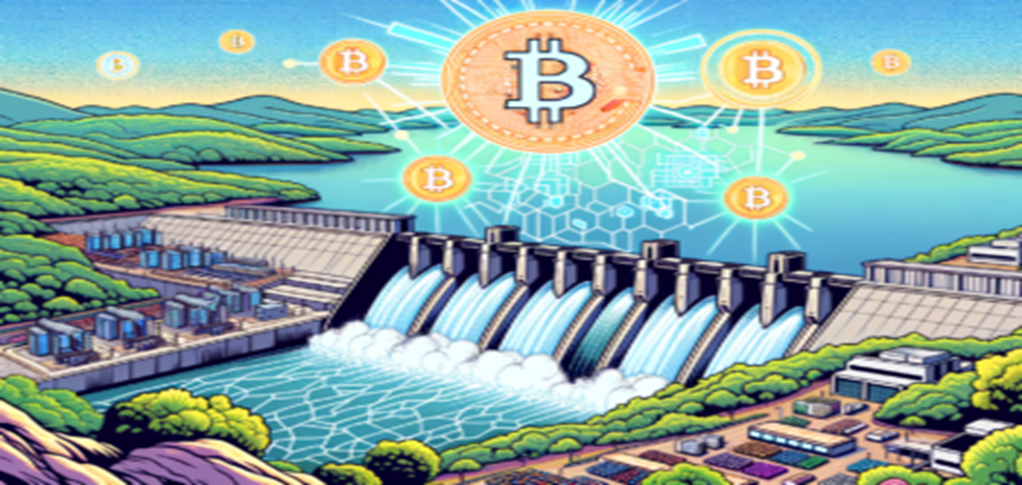
Turning Hydropower into Digital Wealth: Should Nepal Explore Crypto Mining and Data Centers?
Nepal’s vast hydropower potential has long been regarded as one of the country’s most important economic assets—and one that remains significantly underutilized. With abundant river systems descending from the Himalayas, Nepal possesses an estimated 40,000 MW of economically feasible hydropower potential. In recent years, electricity generation capacity has expanded rapidly as new hydropower projects have come online. This expansion has allowed Nepal to eliminate chronic power shortages and begin exporting electricity to neighboring countries.
According to the Nepal Electricity Authority (NEA), the country exported electricity worth Rs 17.46 billion in FY 2024/25, selling about 2.37 billion units of electricity at an average rate of roughly Rs 7.43 per unit. Exports have continued to rise. With installed generation capacity exceeding 3,600 MW and monsoon-season output frequently surpassing 3,000 MW, Nepal often produces substantially more electricity than its peak domestic demand of around 2,100 MW, creating a sizeable seasonal surplus available for export. In addition to India, Nepal has begun exporting electricity to Bangladesh through the Indian power grid, marking a new step toward regional energy trade. Despite this progress, Nepal’s hydropower system is heavily dependent on run-of-river projects, which produce large surpluses during the monsoon but much lower output in winter (Annual Report of Nepal Electricity Authority 2024/25).
Nepal is gradually emerging as a clean-energy exporter in South Asia due to its abundant hydropower resources. However, as seasonal electricity surpluses increase, policymakers face an important strategic question: should Nepal continue exporting electricity at relatively low tariffs or explore higher-value uses such as data centers and cryptocurrency mining?
According to the “Energy Development Roadmap and Action Plan 2081,” Nepal’s installed hydropower capacity is projected to reach 15,000 MW by 2030 and 25,800 MW by 2035. Most plants are Run-of-River (ROR), meaning they produce a massive surplus during the rainy season that often goes to waste if not exported.
Despite these positive developments, the price Nepal receives remains modest, often between Rs 7–8 per unit. From an economic perspective, exporting surplus is better than wasting it. However, it means Nepal is exporting “primary energy” rather than higher-value digital products that can be derived from that energy. Thus, Nepal risks behaving like a “banana economy”—exporting its primary natural resources at low prices while importing high-value technology and services from the same countries it powers.
Emerging Opportunities: Data Centers
Globally, the digital economy is becoming one of the largest consumers of electricity. According to the International Energy Agency, data centers already account for roughly 1–1.5 percent of global electricity demand, and this share is expected to increase as artificial intelligence and cloud computing expand. Global tech giants are rapidly expanding AI and cloud infrastructure, with Google planning about $25 billion in new data-center investments, Microsoft committing over $80 billion for AI-focused data centers, Amazon Web Services developing multi-billion-dollar hyper scale facilities worldwide and OpenAI pursuing massive AI computing expansion through initiatives such as the $500 billion Stargate infrastructure project. These massive investments demonstrate that AI and cloud infrastructure are rapidly becoming one of the most electricity-intensive industries in the global economy, creating opportunities for countries with abundant renewable energy—such as Nepal—to attract data centers powered by hydropower.(International Energy Agency, 2023).
According to an independent study by Energy and Environmental Economics, Inc. (E3), a 100 MW hyper scale data center for a company like Amazon, could generate approximately $3.4 million in surplus value per year at 2025 rates (rising to about $6.1 million by 2030) through power payments above utility costs that can also support grid investment, to host economies. Beyond direct revenue from electricity, leases, and taxes, data centers would generate significant spillover benefits, including high-skilled job creation, technology transfer, and development of supporting industries like logistics, maintenance, and security. It would also strengthen digital infrastructure, boost cloud adoption and e-governance, and attract further regional investment, amplifying economic, technological, and social impacts well beyond the facility’s immediate earnings. For a country with roughly a $50 billion economy, these benefit from data centers would be huge boost. Countries with abundant renewable energy—including Iceland and Norway—have successfully attracted these investments.
The Government of Nepal’s FY 2026/27 (2083/84) budget further supports the development of digital industries powered by hydropower. The budget emphasizes digital transformation, artificial intelligence, innovation, and technology-driven economic growth. It also proposes the establishment of a Sovereign AI Compute Centre and prioritizes continued investment in hydropower and digital infrastructure (Ministry of Finance, 2026). These initiatives reflect a growing recognition that Nepal can use its renewable energy resources not only for electricity exports but also for higher-value sectors such as data centers, AI computing, and cloud services.
Cryptocurrency mining: A New Energy Use Case
Another emerging application of surplus electricity is cryptocurrency mining. Mining involves high-performance computing systems that validate blockchain transactions and receive rewards in digital assets such as Bitcoin. Energy cost is the single most important factor determining mining profitability (Cambridge Centre for Alternative Finance, 2024). As a result, mining operations tend to concentrate in locations with abundant low-cost electricity. In addition, most of Nepal’s hydropower plants are run-of-the-river and cannot store excess monsoon electricity. Crypto mining machines—which do not need to operate year-round—can flexibly use seasonal surplus power that would otherwise be wasted, converting it into immediate digital revenue. A notable regional example is Bhutan, a state-led crypto development. The country has invested heavily in cryptocurrency mining using hydropower through its sovereign investment arm Druk Holding & Investments. Bhutan has also partnered with international firms such as Bitdeer Technologies Group and has plans to expand its cryptocurrency mining from around 100 MW to 600 MW within a couple of years. Bhutan has been able to accumulate one of the world’s largest sovereign Bitcoin reserves—worth at times over 40 % of GDP—while generating revenue for public services, creating jobs, attracting investment, and promoting digital innovation. It emphasizes green crypto, using 100 % renewable energy, while building strategic reserves of Bitcoin and Ether and integrating digital assets into economic hubs like Gelephu Mindfulness City. These initiatives have been able to generate revenue, create jobs, attract investment, and support broader digital infrastructure, positioning Bhutan as a model for how a small mountainous country can convert renewable electricity into globally tradable digital assets.(Druk Holding & Investments, 2024)
Studies show that a 100 MW pilot crypto mining project powered by surplus hydropower could realistically require around $80–100 million and the mining farm could operate around 30,000–35,000 ASIC miners (depending on model and efficiency). At current network conditions for mining Bitcoin, such a facility could potentially mine around 500–800 BTC per year.
If Bitcoin were priced at $60,000 per BTC, the annual gross revenue could be approximately the following:
500 BTC × $60,000 ≈ $30 million
800 BTC × $60,000 ≈ $48 million
This means an $80–100 million mining investment could theoretically generate $30–50 million per year before electricity and operational costs. Countries like Bhutan manage these operations through state entities such as Druk Holding & Investments, converting hydropower into digital assets and later selling them in global markets. For Nepal, using seasonal hydropower surplus for a similar 100 MW pilot project could create a new export-oriented digital revenue stream while also attracting investment in data centers and blockchain infrastructure.
This shows that, Nepal should strategically utilize surplus hydropower for high-value digital industries—such as data centers, cloud infrastructure, and regulated crypto mining—rather than exporting electricity at low prices, enabling the country to generate higher economic returns, develop digital infrastructure, create skilled employment, and position itself as a renewable-powered digital hub in South Asia.
Challenges
Despite the significant potential of using Nepal’s surplus hydropower for state-led cryptocurrency mining and data centers, several challenges may hinder investment and implementation. Infrastructure limitations, including inadequate high-capacity transmission networks, reliable internet connectivity, and advanced cooling systems pose major obstacles to large-scale operations. Additionally, cryptocurrency mining and modern data centers require substantial upfront capital for hardware, facilities, and grid upgrades. Regulatory uncertainty surrounding cryptocurrency activities and digital infrastructure investments further discourages potential investors. Nepal also faces a shortage of skilled professionals in blockchain technology, cybersecurity, and data center management. The seasonal nature of run-of-the-river hydropower plants creates fluctuations in electricity availability, making year-round operations more difficult. Furthermore, volatile cryptocurrency prices can lead to uncertain revenues, while rapid technological advancements necessitate frequent equipment upgrades and reinvestment. Environmental considerations and the need for sustainable long-term energy management must also be carefully addressed to ensure the viability of such projects.
Recommendations
While challenges related to infrastructure, regulation, and investment remain, targeted policy reforms and carefully designed pilot projects can help Nepal gradually build a competitive digital energy industry. Establishing a clear regulatory framework for cryptocurrency mining and data center operations would provide certainty for investors and encourage responsible development. Nepal can utilize its seasonal surplus hydropower, particularly during monsoon months, to support energy-intensive digital industries while developing pilot projects of 50–100 MW to test feasibility and operational models. Creating dedicated digital energy zones near major hydropower plants can reduce transmission costs and improve efficiency. Public–private partnerships with international technology firms can bring much-needed investment, expertise, and technological knowledge. At the same time, investments in grid infrastructure, high-speed internet, and advanced cooling systems are essential for large-scale operations. In the long term, Nepal should prioritize AI and cloud data centers, which offer more stable revenues and higher-value digital exports, helping transform surplus electricity into a sustainable source of economic growth and global digital competitiveness.
Conclusion
Nepal’s hydropower resources offer a rare opportunity to reshape the country’s economic future. Rather than exporting electricity at relatively low prices or allowing seasonal surplus to go unused, the country can strategically utilize this energy for crypto mining and data center development. Although challenges such as regulatory uncertainty, infrastructure limitations, and high initial investment exist, these barriers can be addressed through clear policies, phased pilot projects, and collaboration with private and international partners. With careful planning and long-term vision, leveraging hydropower for digital industries could diversify Nepal’s economy, generate new revenue streams, create skilled employment, and position Nepal as a renewable-powered digital infrastructure hub in the emerging global digital economy.
By : Shreya Mainali, A level graduate at Rato Bangala School , Patan, Lalitpur